
In contemporary residential development, architecture is no longer defined solely by the silhouette of a building. Increasingly, the value of a project is measured by the quality of life it creates for future residents. Marineland Mist Condos represents this evolution, bringing together residential design, community amenities, wellness-focused spaces, and carefully curated outdoor environments into a cohesive urban living experience.
Our studio was commissioned to create a comprehensive set of architectural visualizations for Marineland Mist Condos, translating design concepts into immersive imagery that communicates not only the appearance of the development but also the atmosphere, lifestyle, and emotional experience envisioned by the project team.
The visualization package included residential suites, lobby interiors, fitness amenities, social gathering spaces, and an expansive rooftop garden. Each rendering was developed to help stakeholders evaluate design decisions while providing future residents with a compelling vision of daily life within the development.
Visualizing a Contemporary Residential Community
The success of a condominium development depends heavily on its ability to communicate value before construction is complete. Buyers must imagine themselves living within spaces that exist only as drawings, specifications, and construction documents.
Architectural visualization bridges this gap.

For Marineland Mist Condos, the objective extended beyond producing photorealistic images. The renderings needed to tell a story about modern urban living, demonstrating how architecture, interior design, landscape planning, and community amenities work together to create a vibrant residential environment.
Every visualization was carefully composed to highlight the relationship between private living spaces and shared community experiences. The resulting imagery communicates comfort, sophistication, and a strong connection between residents and their surroundings.
Residential Interiors Designed for Everyday Living
The suite interiors were visualized to showcase contemporary residential layouts that prioritize openness, natural light, and functionality.
Large windows establish a visual connection between interior spaces and the surrounding cityscape. Open-plan living areas combine kitchens, dining spaces, and lounges into cohesive environments that encourage social interaction while maximizing usable floor area.

The kitchens demonstrate a balance between practicality and refined aesthetics. Contemporary cabinetry, integrated appliances, stone-inspired surfaces, and carefully selected finishes create a space that feels both elegant and highly functional.
One of the featured suites introduces a bold kitchen palette, utilizing rich green cabinetry paired with natural materials and bright surfaces. The result is a contemporary interpretation of residential luxury that avoids excessive ornamentation while maintaining visual warmth.
Throughout the residential visualizations, the design language remains consistent. Neutral backgrounds, warm wood flooring, carefully chosen furniture, and abundant daylight create spaces that feel welcoming rather than staged.
The goal was not simply to present furniture layouts but to illustrate how residents might experience daily life within the development—from morning coffee overlooking the city to evenings spent entertaining family and friends.
Materiality and Light as Design Tools
A defining characteristic of the suite renderings is the deliberate use of natural illumination.
Daylight serves as a primary architectural element, emphasizing proportions, enhancing material textures, and creating visual depth. Soft shadows and subtle reflections contribute to realism while reinforcing the sense of openness throughout each residence.

Materials were selected to support this approach. Warm timber flooring introduces comfort and familiarity, while stone surfaces and contemporary fixtures provide contrast and refinement.
The visualization process focused on accurately reproducing these material relationships, ensuring that future residents can understand how finishes interact under real-world lighting conditions.
This attention to detail transforms technical design information into emotionally engaging imagery.
The Lobby as a Statement of Arrival
For many residents and visitors, the lobby forms the first impression of a condominium development.
At Marineland Mist Condos, the lobby was conceived as a dramatic double-height space that establishes the identity of the building while functioning as a welcoming communal environment.

The visualizations reveal a sophisticated composition of architectural elements. Vertical blue feature screens define circulation zones while introducing rhythm and scale. Large-format stone surfaces contribute a sense of permanence and elegance, while contemporary furniture arrangements create opportunities for informal gathering.
A striking feature wall serves as the visual centerpiece of the space. Integrated lighting installations add a dynamic layer to the architecture, creating a memorable arrival experience that changes throughout the day.

The rendering process emphasized spatial volume and transparency. By carefully controlling perspective and lighting, the imagery communicates both the grandeur of the lobby and its human scale.
Rather than appearing as an oversized institutional space, the lobby feels comfortable, accessible, and active.
Creating Social Spaces Beyond the Apartment
Modern condominium developments increasingly compete through amenities rather than unit size alone.
Residents seek opportunities for recreation, social engagement, wellness, and relaxation without leaving the building.

Marineland Mist Condos responds to this demand through a collection of thoughtfully designed communal spaces.
One of the key amenities visualized for the project is a contemporary party room and social lounge. The space combines dining areas, casual seating, entertainment features, and panoramic views.
The visualizations highlight multiple zones that support different activities simultaneously. Residents can host private events, work remotely, socialize with neighbors, or simply enjoy the surrounding views.
Material selections reinforce the upscale character of the space. Dark feature walls, illuminated accents, warm upholstery, and contemporary furnishings create an environment that feels both sophisticated and inviting.
These amenity spaces extend the usable living area beyond the private suite, contributing significantly to resident satisfaction and community building.
Wellness Through Design
Health and wellness have become essential considerations in residential development.
The fitness facility at Marineland Mist Condos reflects this shift, offering residents convenient access to exercise and recreation within the building.
The visualization package showcases a spacious gym equipped with cardio equipment, strength-training zones, stretching areas, and mirrored workout spaces.
Architectural features such as extensive glazing, open sightlines, and integrated lighting contribute to a motivating environment. Rather than feeling isolated, users remain visually connected to the surrounding landscape and city.
The design emphasizes openness and movement.
By avoiding clutter and maximizing circulation space, the gym creates a sense of freedom that enhances the overall wellness experience.
From a visualization perspective, capturing this atmosphere required careful balancing of natural and artificial light, ensuring that equipment, materials, and architectural elements remain visually cohesive.
Rooftop Living Above the City
Among the most significant components of the project is the rooftop amenity terrace.
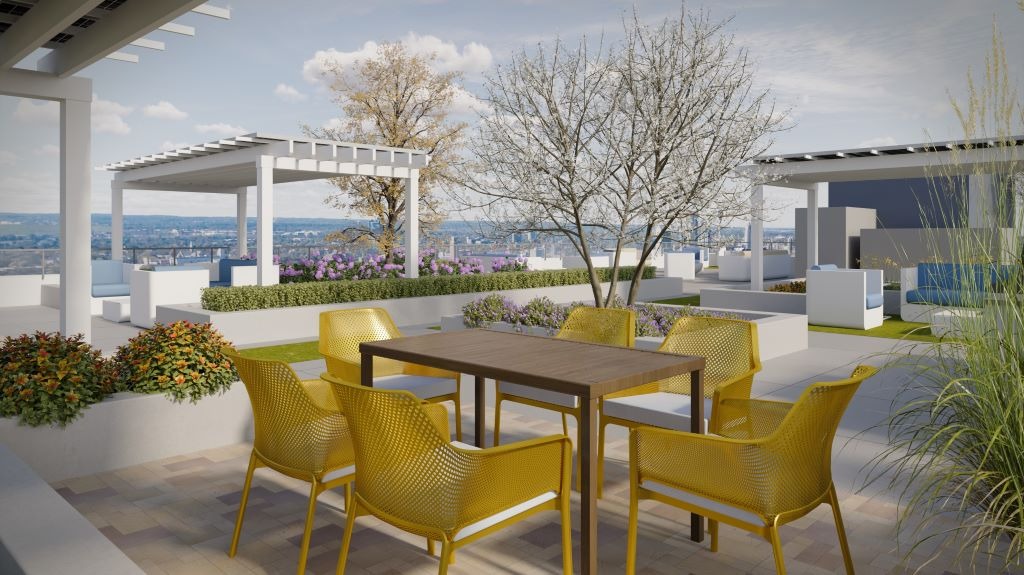
The rooftop garden was conceived as an elevated community destination that combines landscape architecture, recreation, dining, and relaxation within a single environment. Detailed planning documents specified planting arrangements, pergolas, seating zones, firepit areas, outdoor kitchens, paving materials, and decorative landscaping.

The rooftop design transforms underutilized roof space into an active social landscape.
Pergolas provide shade and structure while defining gathering zones. Outdoor dining areas encourage communal interaction. Lounge spaces offer opportunities for relaxation, and landscaped planting beds soften the architectural environment.
The visualizations demonstrate how these elements combine to create a welcoming outdoor destination for residents.
Rather than functioning as a decorative rooftop, the terrace becomes an extension of daily living.
Landscape Design and Environmental Integration
Landscape architecture plays a critical role in shaping the rooftop experience.
The planting strategy incorporates a diverse palette of trees, shrubs, ornamental grasses, hydrangeas, boxwoods, cedars, serviceberry trees, perennials, and groundcover species.
These plant selections contribute seasonal variation, visual interest, privacy, and ecological value.
The design team specifically addressed views toward neighboring industrial properties through strategic landscape screening. Trees and hedges were incorporated to improve visual quality and enhance the experience of rooftop users.
The visualizations communicate how vegetation softens the built environment while creating comfortable outdoor rooms throughout the terrace.
The resulting landscape feels mature, vibrant, and integrated with the architecture.
Outdoor Furniture as Architecture
The rooftop amenity program includes a carefully curated collection of outdoor furniture, dining settings, lounge seating, side tables, firepit installations, and custom outdoor kitchen components.
Rather than treating furniture as decorative accessories, the design integrates these elements into the overall spatial composition.
Dining areas encourage social interaction and communal meals. Lounge zones support relaxation and conversation. Firepit seating creates focal points that remain attractive during cooler evenings.
The visualizations emphasize these relationships, demonstrating how furniture contributes to both functionality and placemaking.
Every seating arrangement was modeled and positioned to support realistic patterns of use.
Sustainability Considerations
The project incorporates several environmentally conscious strategies.

Planning documentation references the integration of solar panels on rooftop structures and pergolas, allowing portions of the amenity level to contribute to on-site energy generation.
The rooftop also incorporates extensive green roof components, which provide ecological benefits including stormwater management, thermal performance improvements, and enhanced urban biodiversity.
These sustainability initiatives demonstrate how residential developments can balance environmental responsibility with resident comfort and amenity value.
The Role of Architectural Visualization
Creating visualizations for Marineland Mist Condos involved far more than producing attractive images.
Each rendering functioned as a communication tool, helping designers, developers, consultants, and stakeholders align around a shared vision.
Visualization allowed the team to evaluate furniture layouts, landscape compositions, lighting strategies, material palettes, and amenity experiences before construction.
Potential buyers benefit from this process as well.
Photorealistic imagery transforms technical documentation into understandable experiences, helping future residents envision how the completed development will feel and function.
Conclusion
Marineland Mist Condos demonstrates the growing importance of lifestyle-driven residential design.
The project combines thoughtfully planned suites, wellness amenities, social gathering spaces, and an expansive rooftop environment into a cohesive residential experience. Every component—from the lobby and fitness center to the landscaped terrace and private residences—contributes to a broader vision of contemporary urban living.
Through architectural visualization, these ideas become tangible.
The imagery created for Marineland Mist Condos captures more than architecture; it communicates atmosphere, community, and the daily experiences that define life within the development. By transforming design intent into immersive visual narratives, the visualization process helps reveal the full potential of a project long before construction is complete.